WOOWE
urban & product design
Regeneration of public spaces
Interactive Sustainability
Educational Gamification for Generation Alpha
THE AGE OF WASTE
We live in what is often referred to as the “Age of Waste”, dominated by a linear economic model—“take, make, dispose”—that is unsustainable for our planet. Looking at new generations, particularly children from Generation Alpha, I felt a strong urgency to act through design. My goal was to transform waste management, often perceived as a boring and complex task, into an opportunity for emotional and civic connection. WooWe was born from the heart, from the desire to create a space where environmental education comes to life through beauty, inclusion, and play.
GAMIFICATION
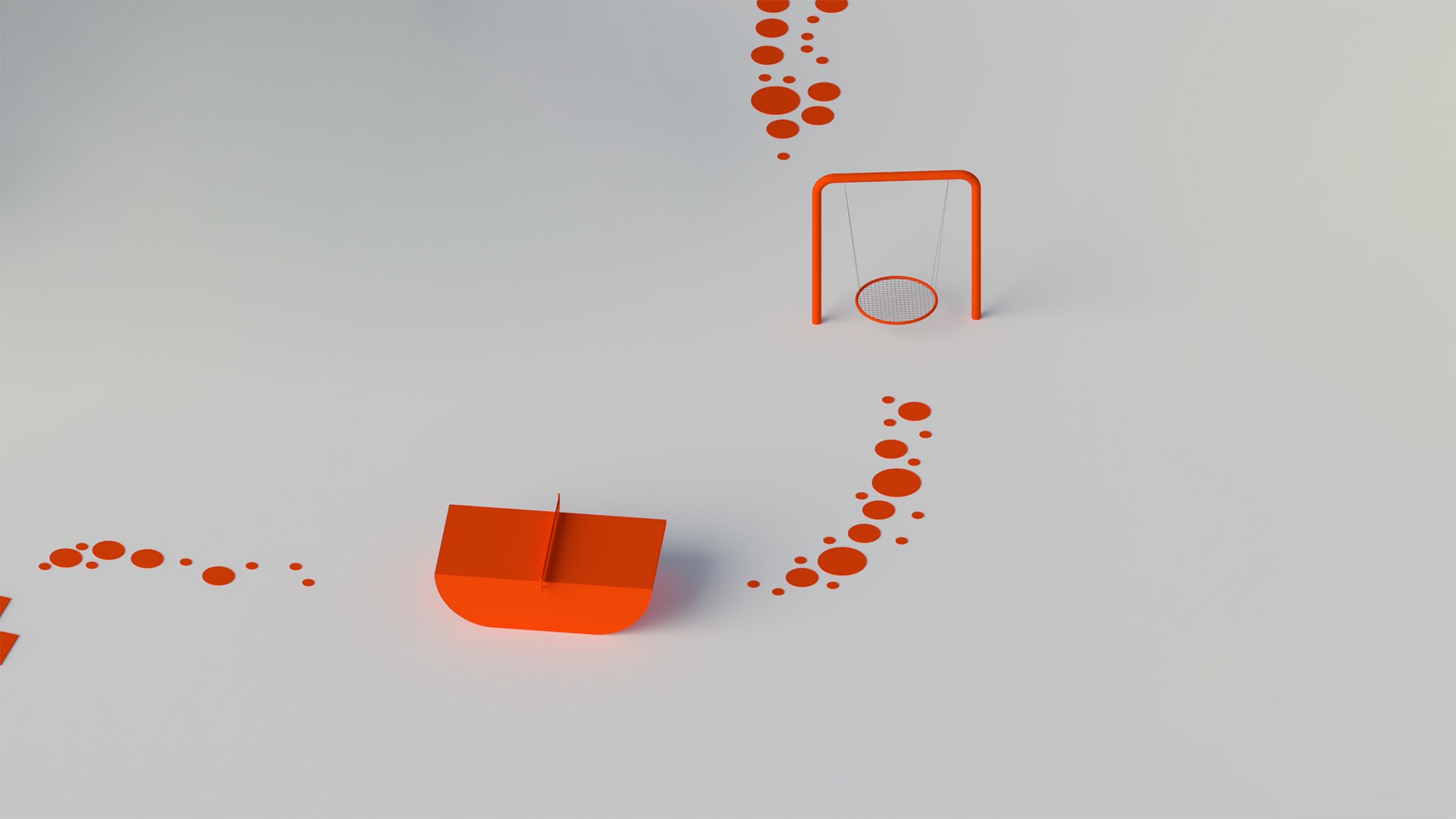
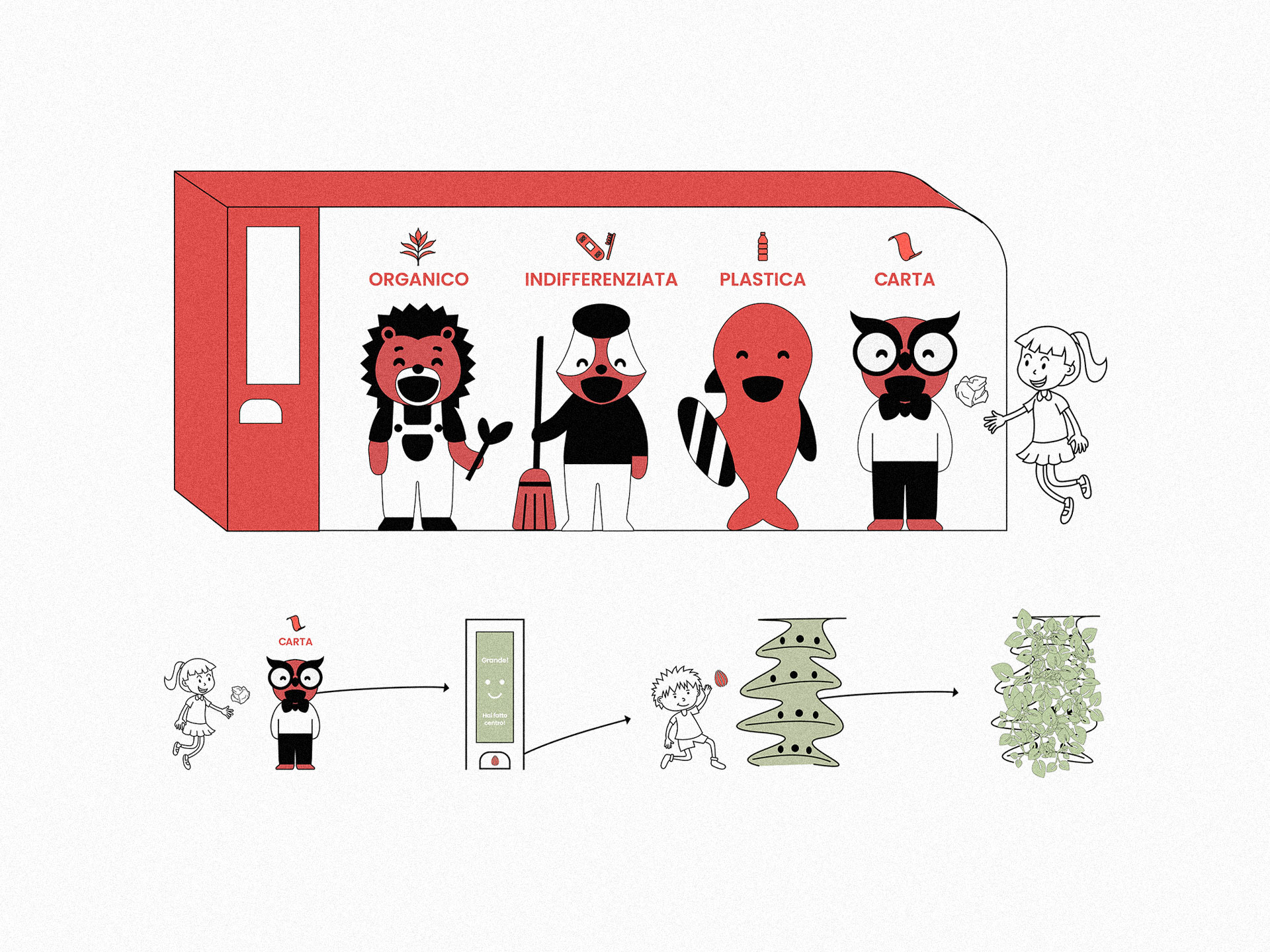
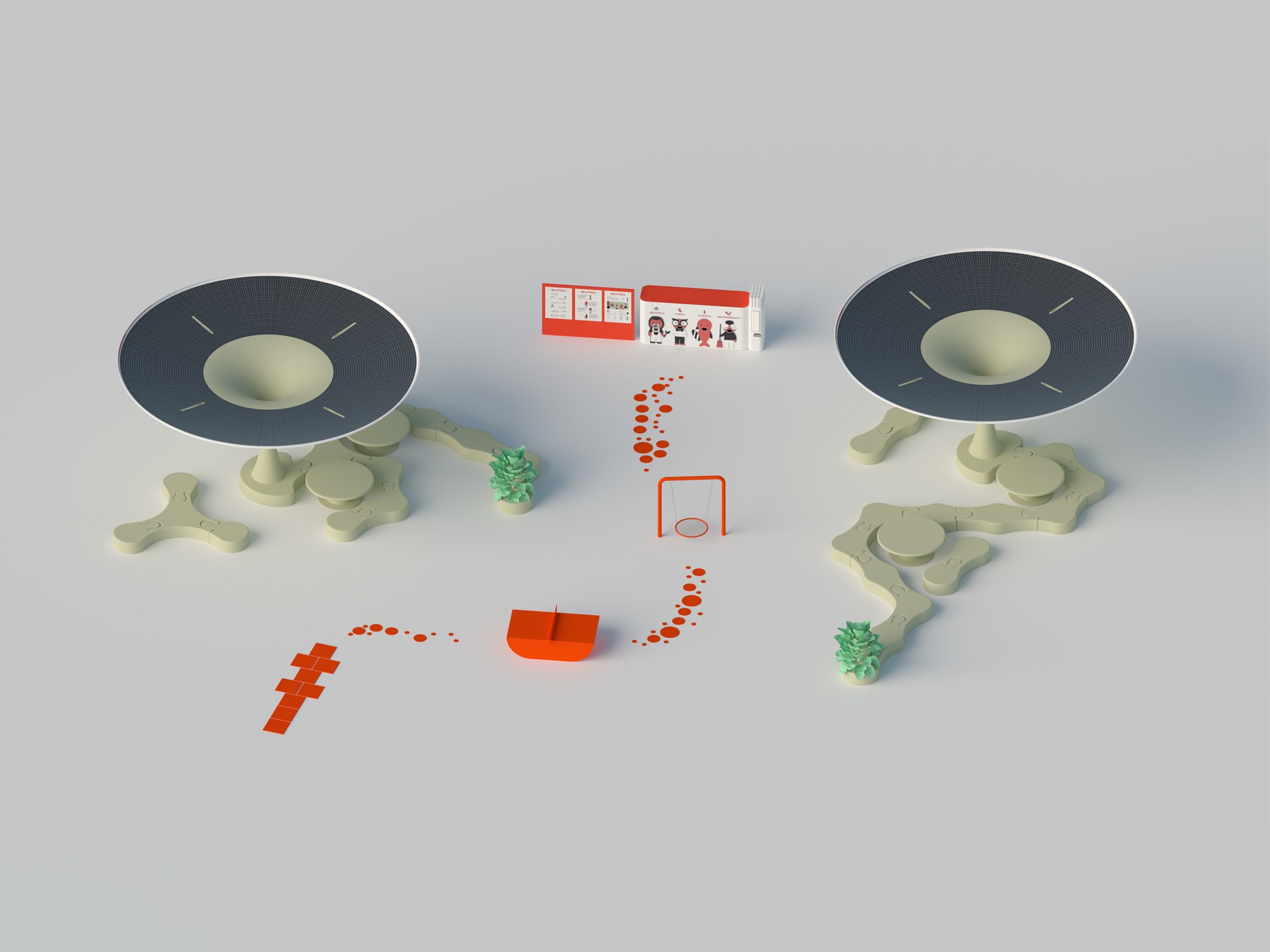
WooWe takes shape as a modular urban furniture system that turns sustainability into a playful, tangible, and living experience. The beating heart of the ecosystem is the Smart Bin, an interactive device that, through optical sensors and an interface guided by empathetic, stylised animal characters, recognizes the type of waste being disposed of. By transforming a daily gesture into an act of care, the system provides immediate feedback: it rewards correct actions by dispensing a seed to be planted, creating a visible link between a small individual action and a real collective benefit.
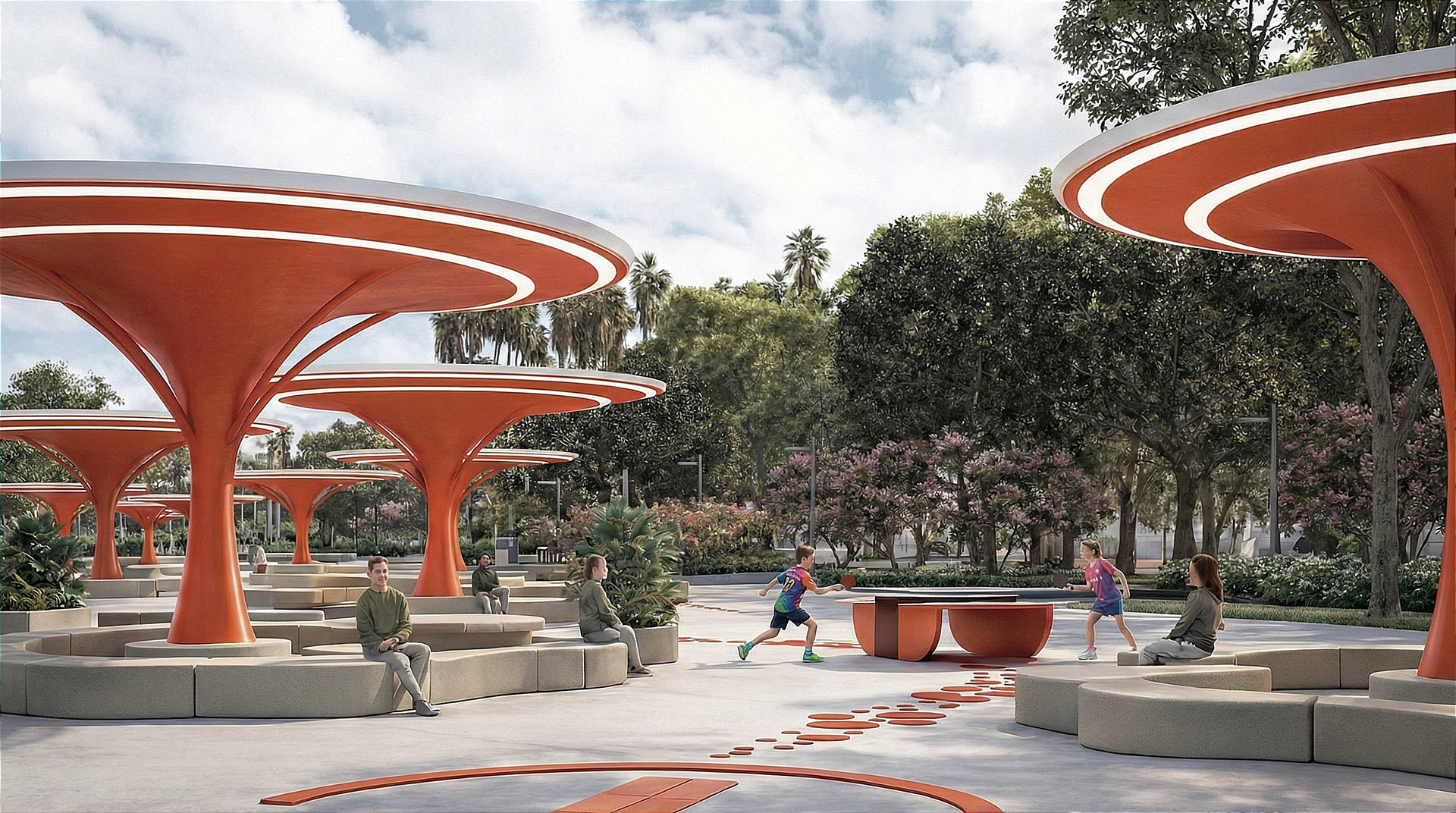
The entire design vision is rooted in the principles of circular economy and a deep respect for the environment. The seating modules are produced using robotic 3D printing in REMELT, a regenerated plastic derived from urban waste sorting, which reduces CO₂ emissions by up to 75%. Bringing life and energy to the installation is a hydro-solar harvesting system: a majestic tree-like structure that collects rainwater for hydroponic towers and generates clean energy, turning the urban oasis into a fully self-sufficient ecosystem.
THE IMPACT
This project aspires to be a manifesto of ethical design. Even at the end of their lifecycle, WooWe modules are shredded and regenerated within a continuous loop. Thanks to its modularity, the installation is flexible and adaptable to multiple urban contexts, such as squares and public gardens.